Pieces of Portugal

Last January, while on winter vacation from teaching in Georgia, I met my mom in Lisbon for our second European adventure. Since it’s literally been one year since that trip, I doubt I’ll ever get around to posting the pictures on Facebook. But I did somewhat organize the 3,000 photos I took, in order to make a photo book for my mom’s Christmas present, so I thought I’d share a few of my favorites.
IMG_4737

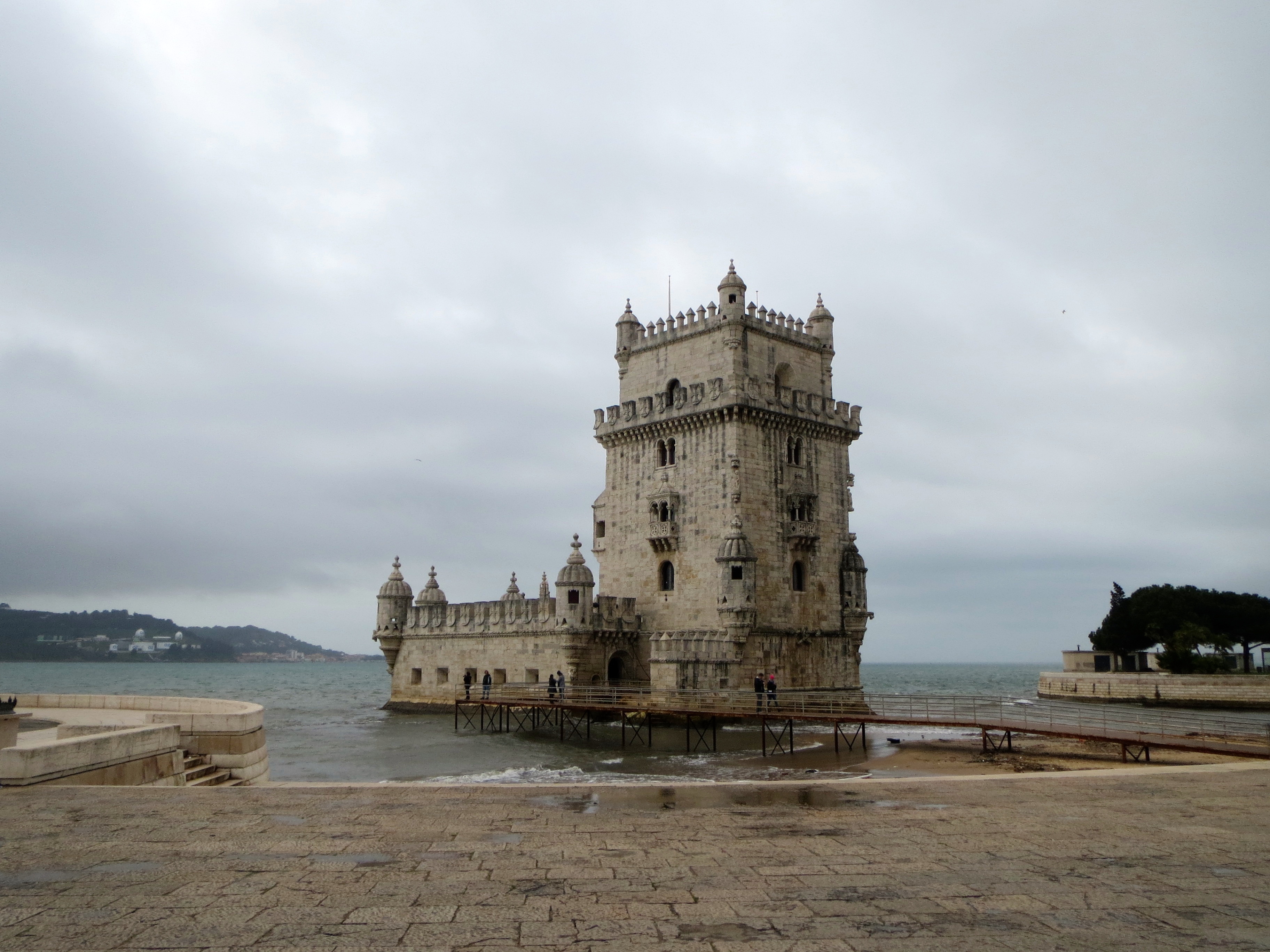
The Belém Tower, built in the early 16th century, is a prime model of the Manueline (Portuguese late Gothic) architecture that is prevalent in Lisbon. Though its columns and turrets are intricately detailed, the tower contains many cannons and prison cells, as it was mostly used as a defense from invasions. Despite being at the edge of a major city, looking out at the mouth of the Tagus river from the top of tower, I felt like I was alone on a deserted island.
IMG_5004

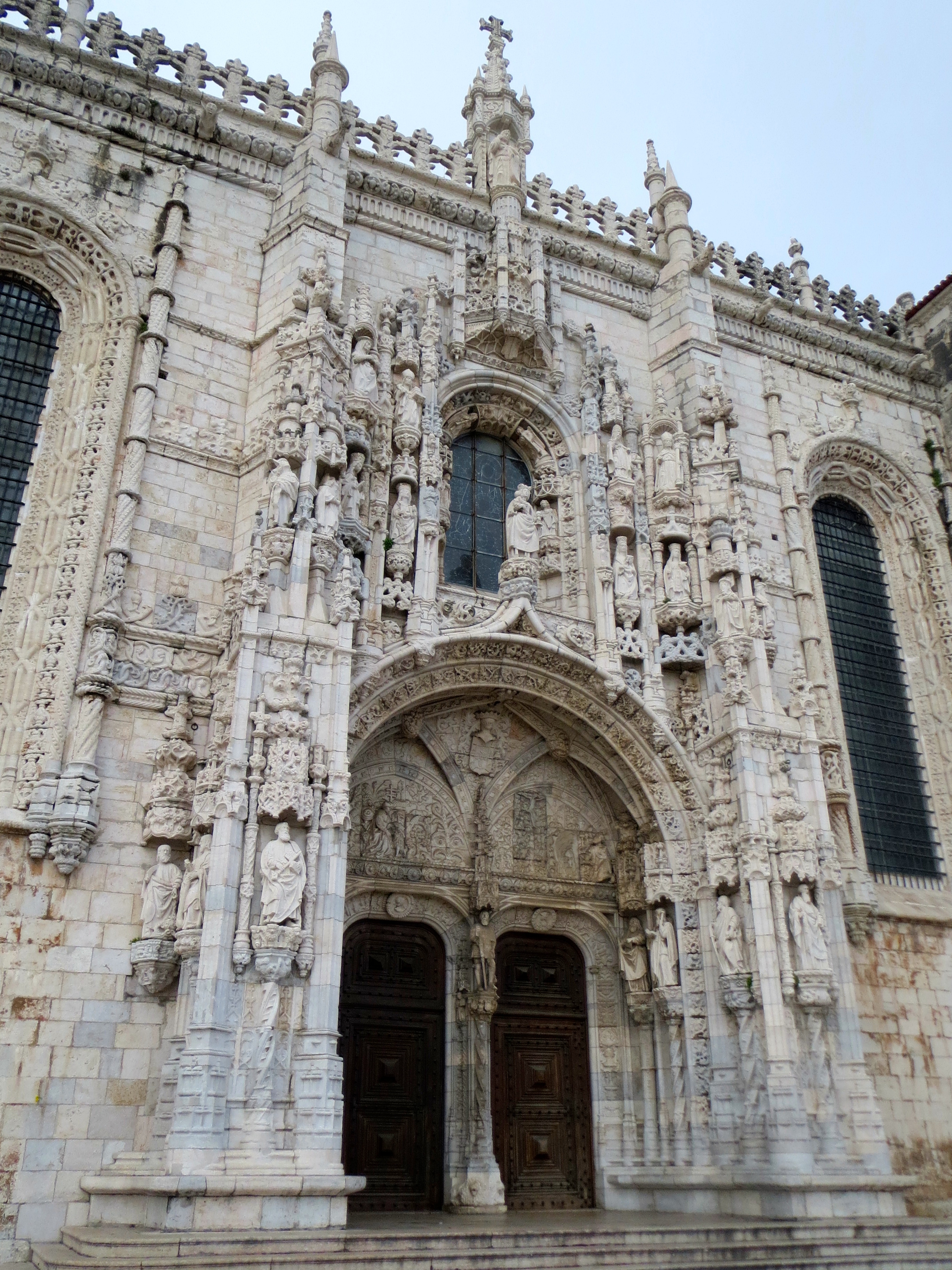
Construction on Lisbon’s Jerónimos Monastery began in the 16th century and didn’t end until an entire century later. Not surprising, considering the building is over 300 meters long and stunningly elaborate in its architecture and design. Just check out the detail on this portal… And this is only an entrance! Talk about dreaming big.
IMG_4647

There are few words that can describe how incredibly delicious Portuguese pastries are, so I’ll just say that I would return to Portugal simply for another bite! My mom and I enjoyed pastries and coffee every day for breakfast… Along with every other meal. Honestly, Portugal’s pastel de nata can easily rival France’s macaron!
IMG_5058

When I think of Portugal, I think of tiles. And the azulejos I saw, including the above on the side of a church in Porto, did not disappoint. Beautiful, artistically detailed tiles, old and new, are all over the buildings, countering the monotony of a busy city.IMG_5214

The Gothic exterior of the Church of São Francisco in Porto is a stunning sight at dusk. But even more remarkable is the interior (of which I don’t have a good picture because photography is not allowed inside). Past these doors, the Baroque-styled walls, roof, and pillars are not only painstakingly elaborate, but the majority is decorated in gilt woodwork. The lights reflecting off of the gold surfaces give the jaw-dropping, almost frightening illusion that the whole church is on fire.IMG_5362

The Ribeira district, along the Duoro river in Porto, is historical, popular, and clearly one of the most photogenic areas in one of the most photogenic cities I’ve ever visited. Drawn to the colorful shops, homes, and cafés, you know I stopped for ice cream here.

IMG_5145

Across the Duoro river from Porto is the city of Vila Nova de Gaia, known for the wineries that produce Portugal’s most famous export and Porto’s namesake, port. Look closely to see just a small portion of the countless port houses, historically situated along the water for ease of transportation.

IMG_5607

Vintage vintage bottles at Graham’s prestigious port house. Our tour guide told us that Graham’s was Winston Churchill’s favorite brand of port, though who knows how many others make the same claim? The wine we tasted here was delectable, and we purchased a bottle from my birth year (a vintage year, naturally) for my dad.
IMG_5536

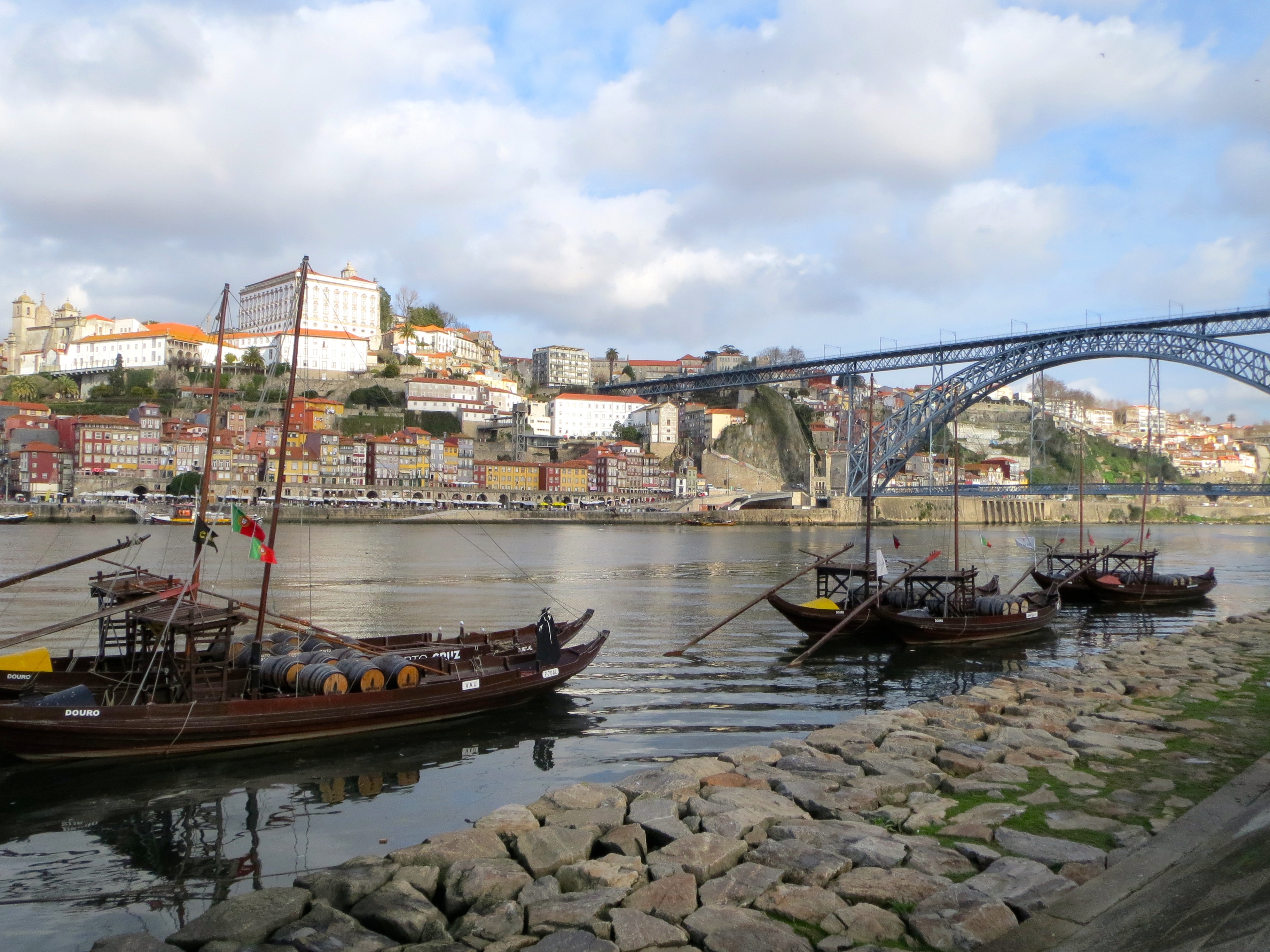
These traditional boats on the Duoro river were historically used to transport port, though they’re probably mainly for show now. Also pictured is one of the five bridges that connect Porto, known as the city of bridges, with Vila Nova de Gaia. The Dom Luís Bridge, designed by Gustav Eiffel before he designed the Eiffel Tower, was the longest arched bridge in the world at the time of its opening in 1886.
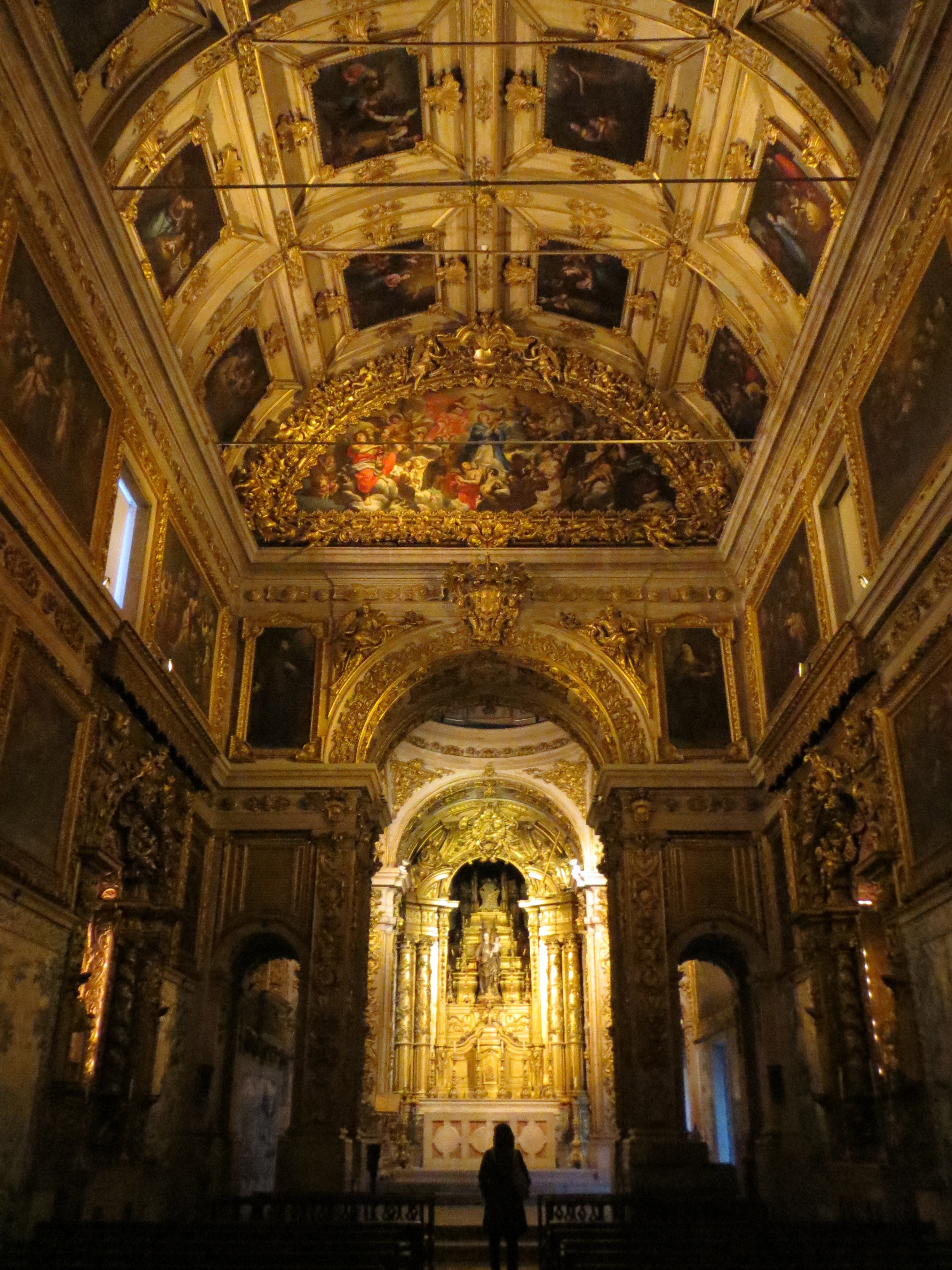
IMG_7382Back in Lisbon for our last day in Europe, Mom and I admired gorgeous azulejos from the past five centuries at the National Tile Museum. The huge collection is housed in a former convent, which contains many rooms that still hold their original splendor. This chapel, decorated with impressive paintings and opulent gilt work, was perfect for our final memories of Portugal.

Georgia on My Mind

While I lived and taught in Georgia, I took an obscene amount of photos and videos. It was overwhelming, but I eventually decided to compile my favorite video clips into a single movie. Even though I use iMovie, making these always takes me a long time because I’m such a perfectionist. The process seemed never-ending (I really can’t stress enough the amount of footage I had…), but I finally finished, just in time for the one-year anniversary today of my arrival in Georgia and the start of my Georgian adventures! Sometimes, it feels like only yesterday when it all began.

The following video is dedicated to the wonderful people I met and the amazing friends I made in Georgia.

This is also exciting because I get to cross off my first item (#92) on my 101 in 1001 list! One down, 100 to go!

Pieces of Georgia

This is almost one year overdue, but I’m finally posting about my experiences in delightful Georgia (the country, not the state)!

IMG_0282

Metal gates leading to a family’s house, gardens, livestock, etc. are very popular among Georgian homes. The family that lives behind this one includes my school’s principal, a teacher, and three students. (Households tend to be large, with extended family members all living together.) My little host brother was calling out to see if his friend had left for school yet. (To see if someone is home, you literally just yell into the yard. No doorbells necessary!) This family has one dog, named Banjo by a previous English teacher, and another dog, named Henry by me.

IMG_0839

I never got carsick until I had to endure day-long rides in a marshrutka (large van for public transportation) over some of the most bumpy, mountainous, and potholed roads. At times like these, I welcomed a short break from THIS. Those animals sure knew how to stop traffic! Also, camo is still pretty hot in Georgia… Unfortunately.

DSCN0032

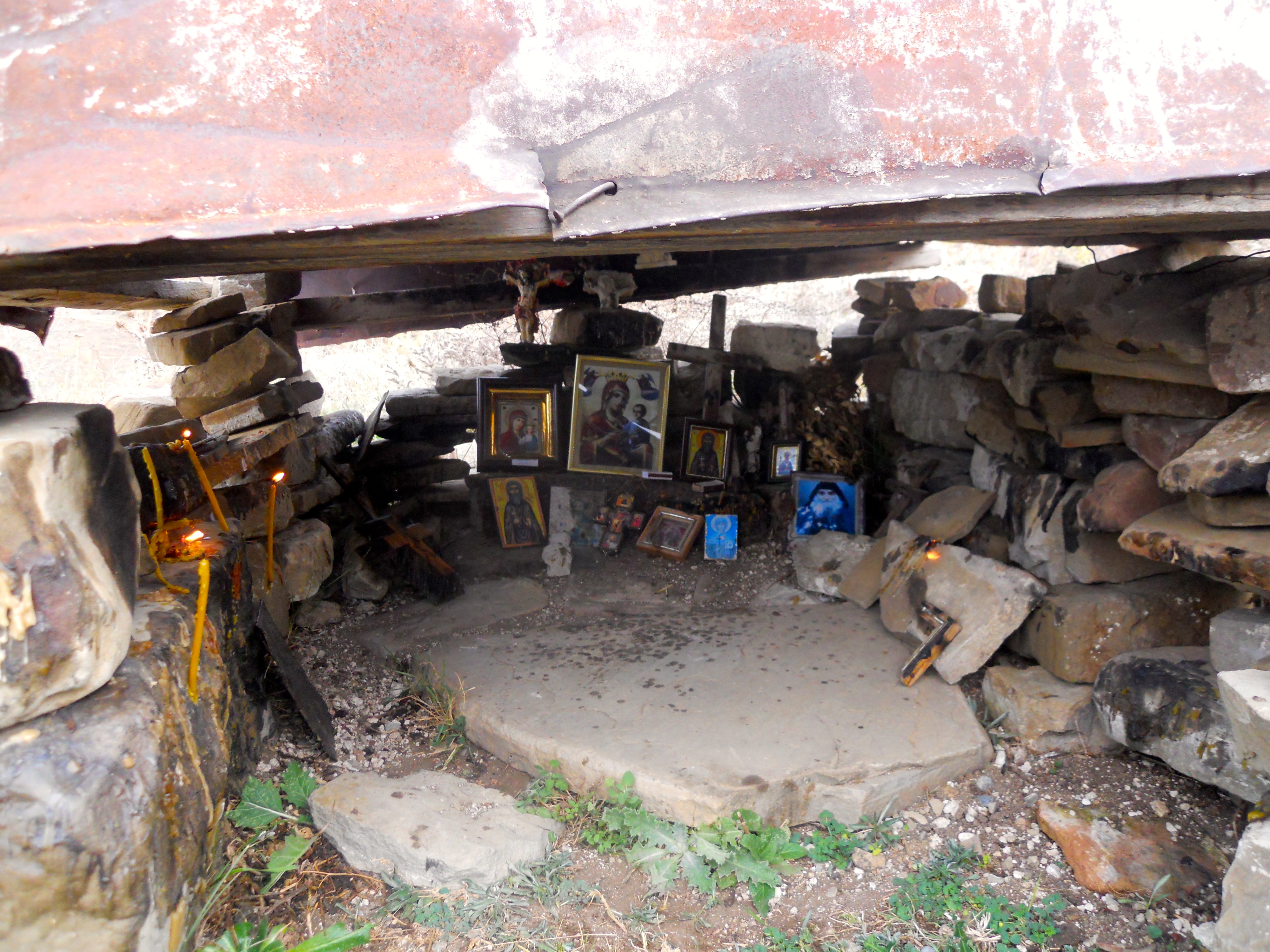
Most citizens of Georgia consider themselves to be Georgian Orthodox. Religious pictures, crosses, and other symbols adorn every room in homes and schools. Whether you’re in a city or a remote village, you can’t go anywhere without being near a church, whether it’s thousands of years old or as tiny as this one. Their Patriarch has a lot of influence on the country. One of the first things foreigners are always asked is whether or not they’re Christian. It seemed like every day was a holiday celebrating a different saint. And yet I don’t think I ever met a Georgian who went to church regularly.

IMG_1777

The beautiful Black Sea. Batumi is the main city on the west coast of Georgia, the climate of which is much nicer than on the east. The city gives the impression of trying (without necessarily succeeding) to become the next Vegas. But Donald Trump has begun building a hotel there, so perhaps it’s up-and-coming after all. I mean the men of Turkey, where gambling is illegal, need somewhere to hang out, right?

DSC07542

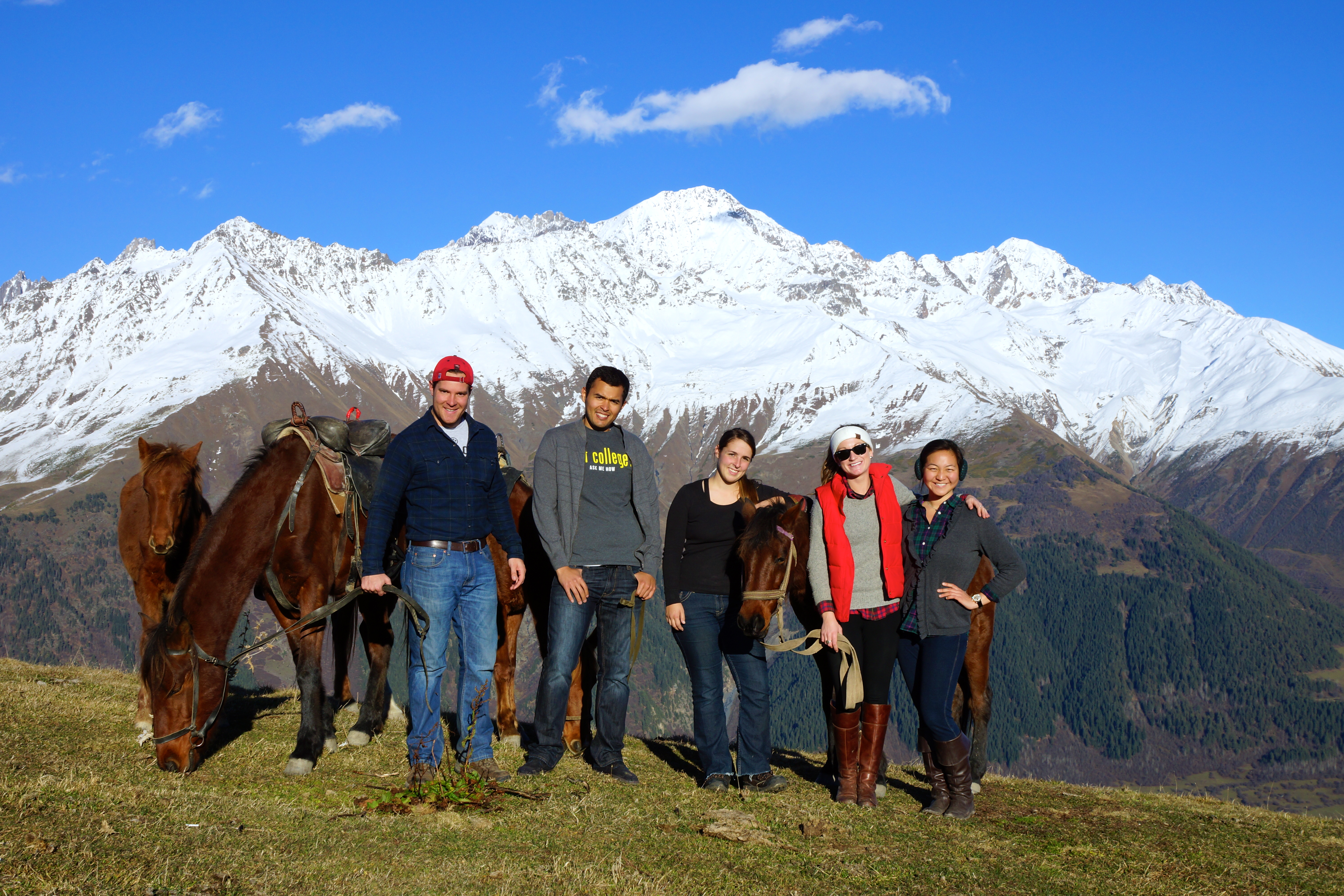
This day in Mestia, a small town high up in the Caucasus Mountains, was unforgettable. We’d asked our guesthouse owner if she could arrange for us to go horseback riding. She literally called up random neighbors to see if their horses were available, had them brought over to the guesthouse, packed us a small lunch, and sent us on our way–no guide, no emergency medical forms, nothing! It was such a thrill to ride around the town, which felt eerily empty, wherever we wanted to lead our horses… Or wherever they wanted to lead us! We did have a few issues related to the fact that these horses did not seem trained to be ridden at all. But eventually we found the base of a mountain, and we spent all day riding up, surrounded by breathtaking views in every direction of the mountains and the town below.

IMG_3113

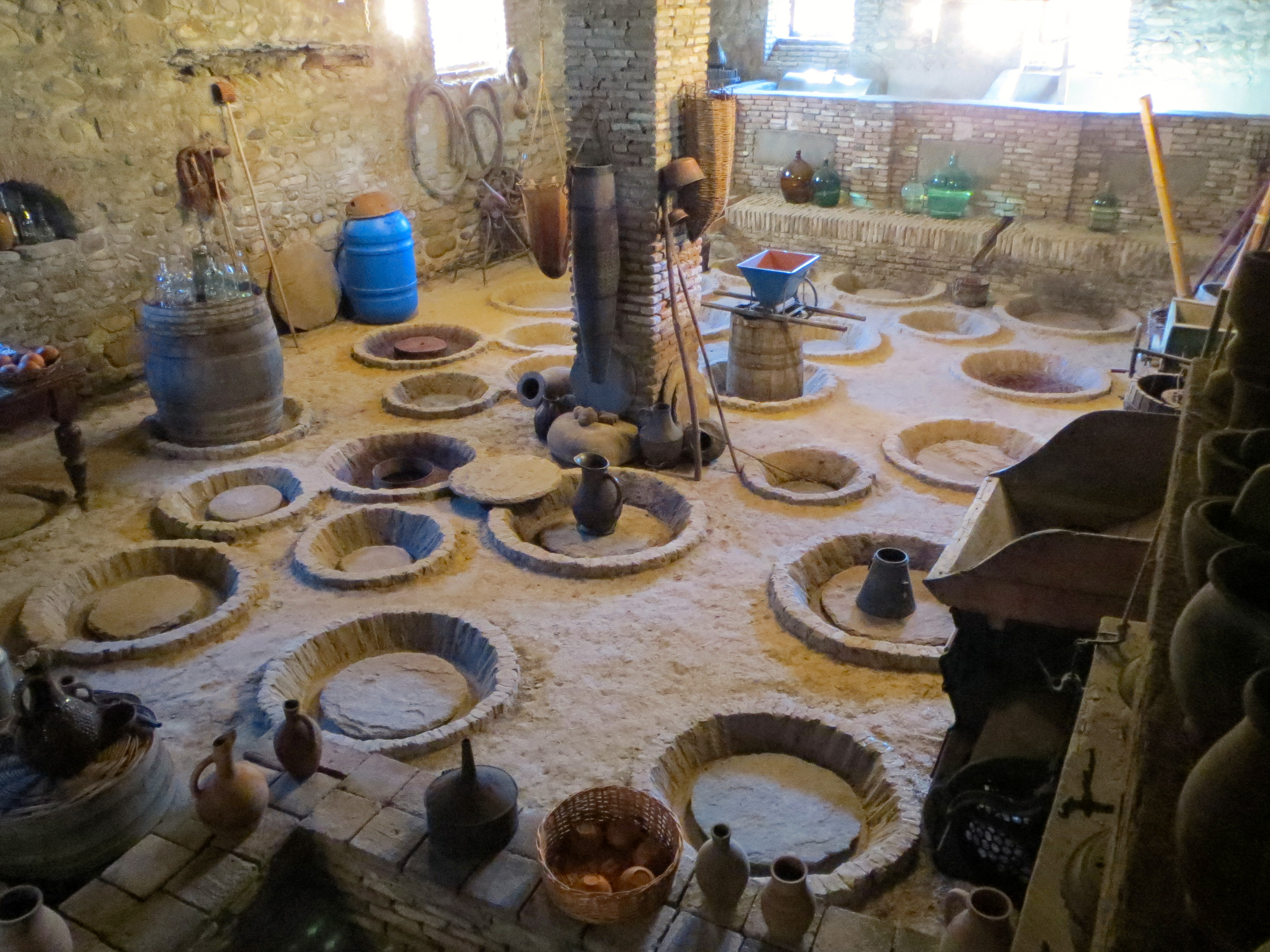
Georgia is one of the oldest regions in the world to produce wine. (We’re talking 6000 BC!) Wine is such a huge part of Georgian culture, and virtually every family makes their own from homegrown grapes. Wine is traditionally stored in clay vessels underground, like at this cellar in Sighnaghi, the wine capital.

IMG_7553

On the weekends, hundreds of residents of the capital city Tbilisi gather all of their old belongings and pop a squat at the Dry Bridge Market. Authentic gold, super old antiques, and other valuables used to be found here, as wealthier Georgians scrambled to leave the country after the collapse of the Soviet Union. Now, it’s mostly touristy things and anything Georgians want to get rid of for a quick buck. Most notable are the paintings, the handmade jewelry, and, naturally, the Soviet-era medical tools.

IMG_8025

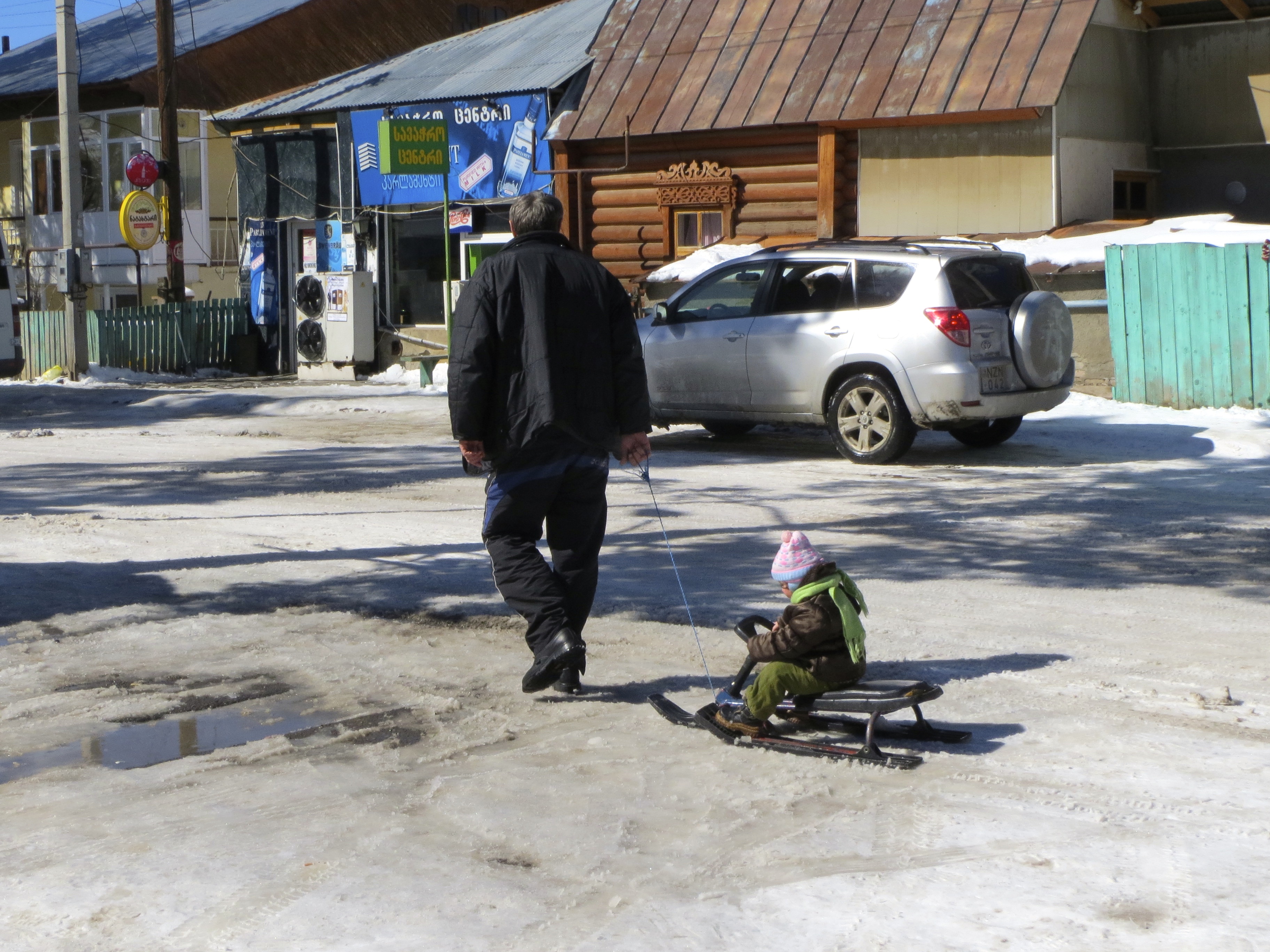
For Women’s Day, we decided to spend the weekend skiing in Bakuriani, a resort town in the mountains. My friend and I struggled to stay upright while walking on the treacherously snowy and icy streets. Meanwhile, all the children in the town were either pushed or pulled by their parents on these little sleds. So adorable! Almost made me glad that the roads weren’t salted… (You wouldn’t think the roads were dangerous by how fast people drove their cars.)
IMG_8617

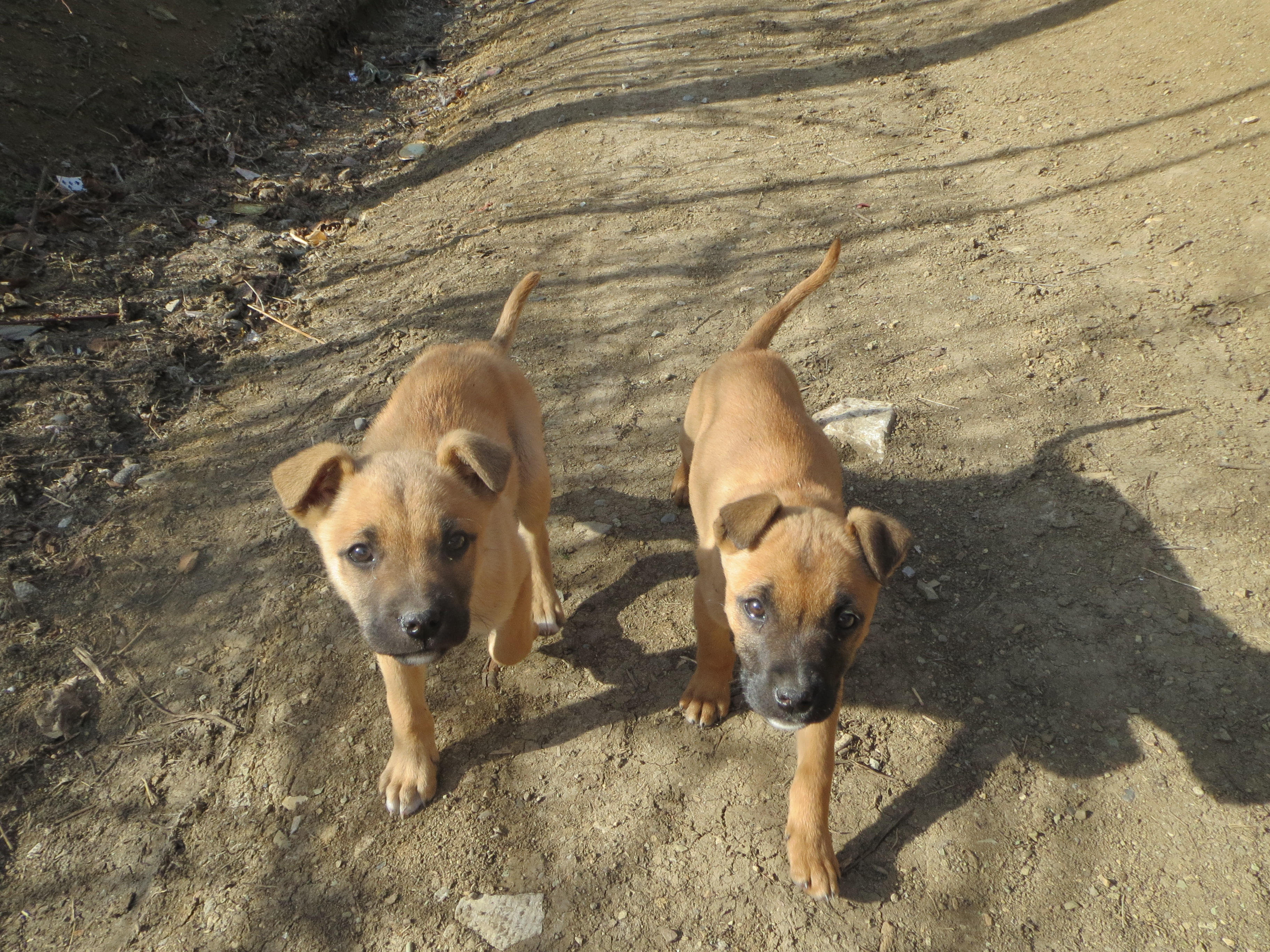
Aw, my pals, Rocky and Roy, the sweetest brother-and-sister duo! They lived at a neighbor’s house, but after I gave them some treats, whenever they saw me, they followed me to and from school. (I don’t think the neighbor was too happy about that, but hey, maybe if he actually fed them once in a while…) Sadly, Rocky passed away far too young, but Roy continued to be my lap puppy.

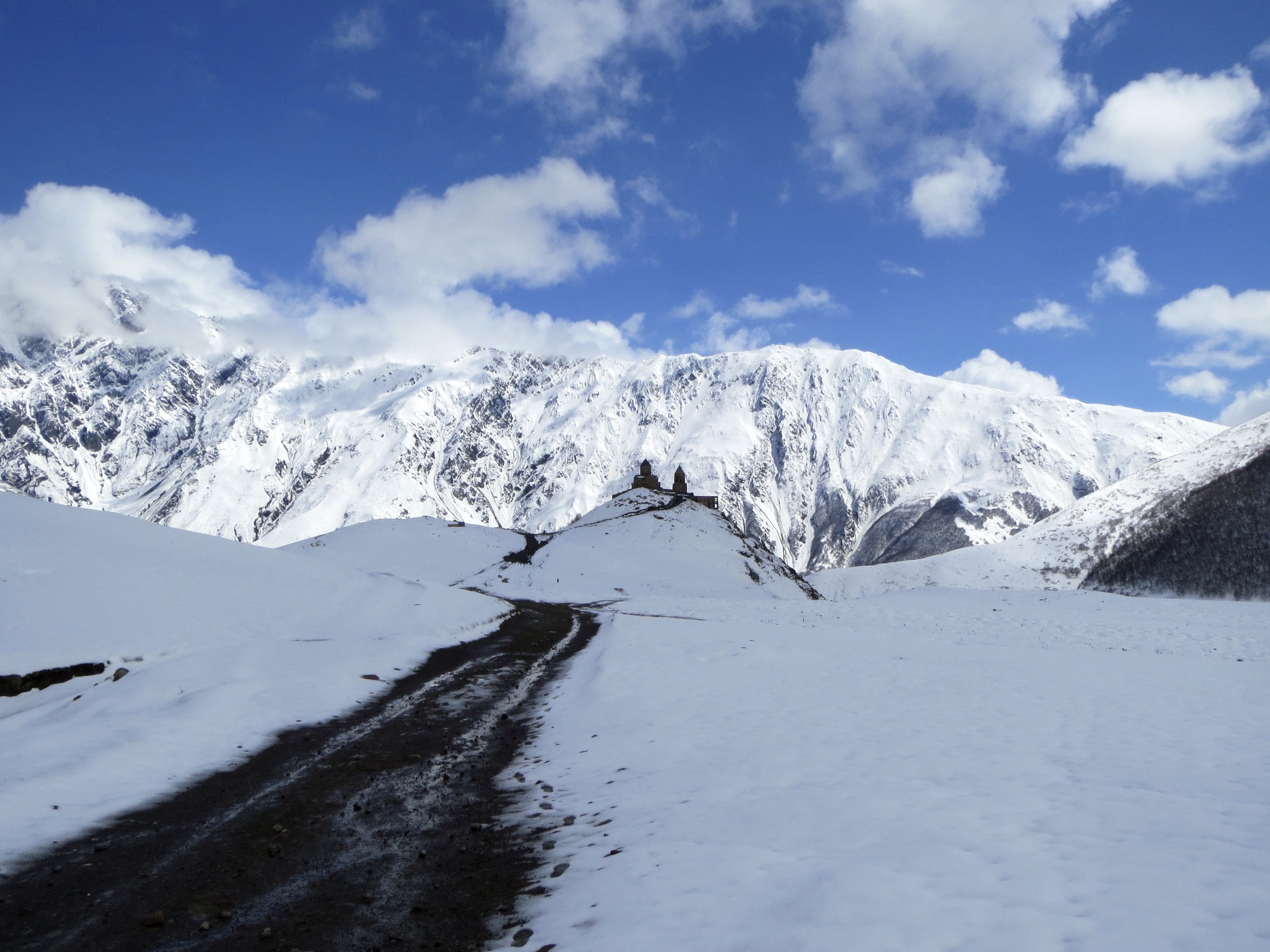
IMG_0315This is undoubtedly one of the most iconic views in Georgia and worth the 1.5-hour hike up a snowy mountain. It would seem that Georgians have a tendency to symbolically place their churches as high up as they can. But even fragile-looking grandmas are willing to make the climb. (At one point, a cable car was installed from the bottom of the mountain to the top, but was destroyed by Georgians who felt it defiled such a sacred place.) From the church, the views of the surrounding mountains and the town of Stepantsminda down below are absolutely gorgeous.